Understand the starting point
Review the control, typical components, programming experience and safe setup requirements.
Practical company-based CNC learning
Develop the skills needed to read, create and verify programmes on relevant controls and parts. Exercises, delivery and the individual company quotation are agreed around your team.
Choose a practical route for operators moving into programming, developing CNC programmers or experienced machinists working with more demanding parts. Training can cover safe machine setup, tooling and offsets, drawings, G-code/M-code, conversational programming, turning, milling and multi-axis strategies.
Before quoting, MGC reviews the machine and control, current team skills, number of trainees, sample parts and required learning outcomes. Course content, duration, delivery location and pricing are then agreed for the company.
From baseline to practical learning
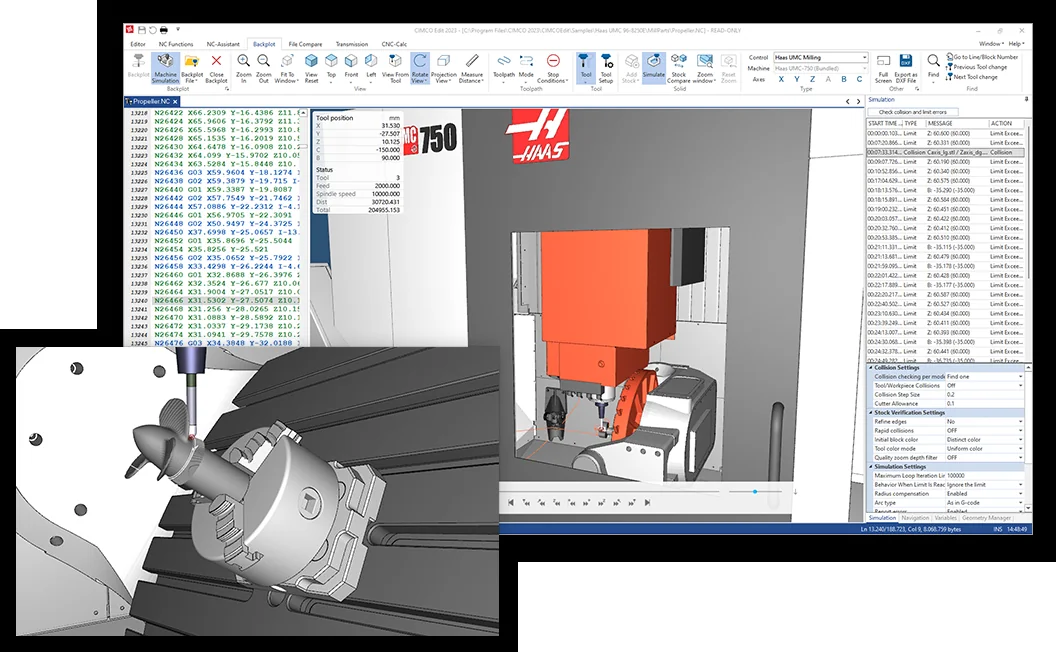
Training is built from your machines, CNC controls and current team skills. The archival simulation above illustrates tool-motion concepts; it is not a recorded class or a promise of a specific machine simulation package.
Review the control, typical components, programming experience and safe setup requirements.
Exercises may include program structure, cycles, tools, offsets and operation sequencing as appropriate.
Review programme logic, verification methods and agreed next steps. Specific learning outcomes are set before delivery.
Archival process example
This is an earlier technical simulation, not footage from a course or a representation of HoloCNC Matrix. It illustrates the movement and operation sequencing that can be discussed during training.